
A method built
on trust.

OUR APPROACHMontessori is not a curriculum to complete. It is a way of seeing children — as capable, curious, and entirely worthy of our patience.
Dr. Maria Montessori didn't set out to invent a teaching method. She set out to observe children closely enough to understand what they already knew.
What she found became the foundation for everything we do at Pooh Bear: that children, given the right environment and the right kind of trust, will teach themselves more than any adult ever could.
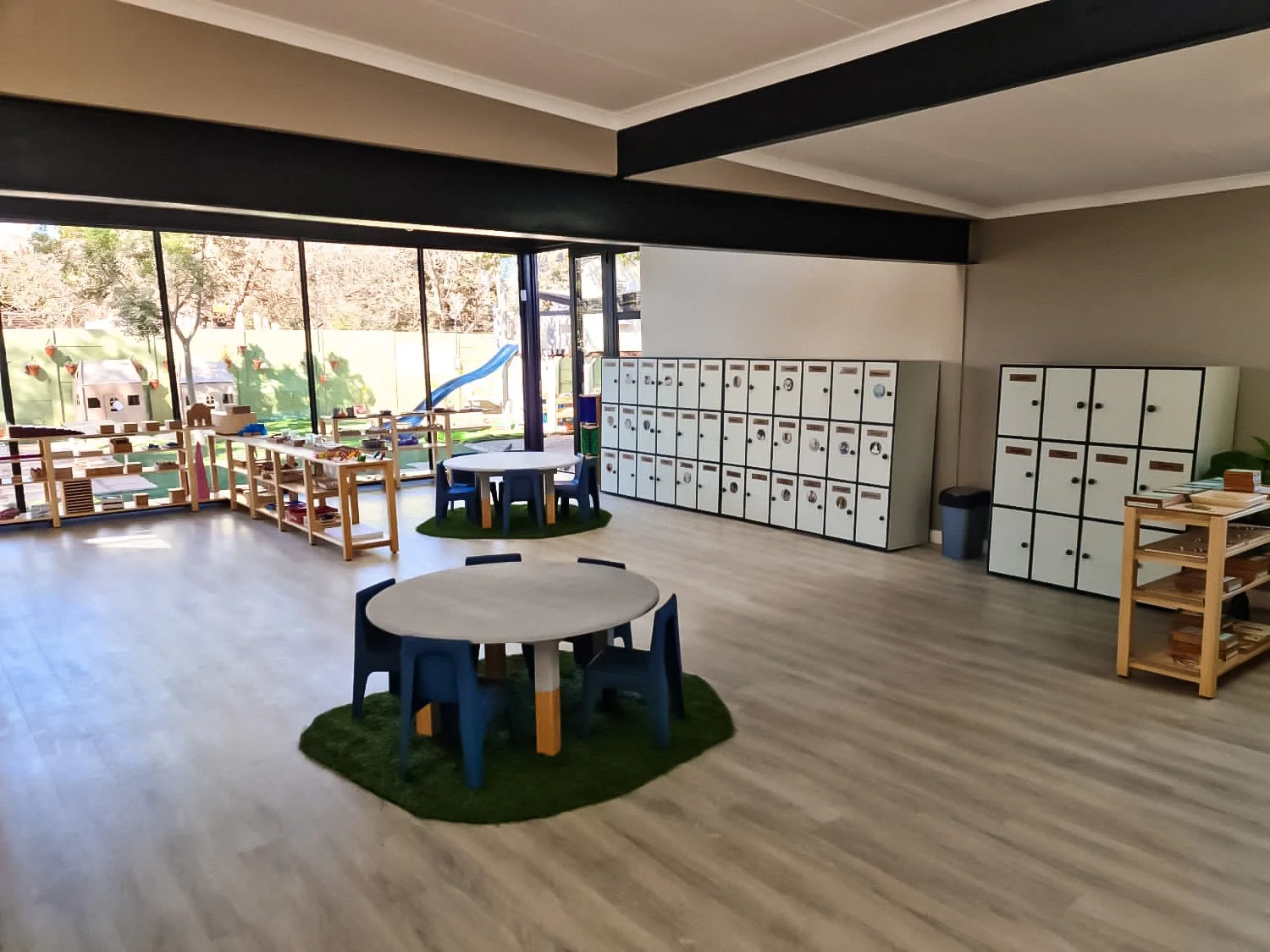
01
The prepared environment
Every shelf is at a child's height. Every material has a single, specific purpose. Nothing is left to chance — the room itself teaches independence before a single lesson begins.
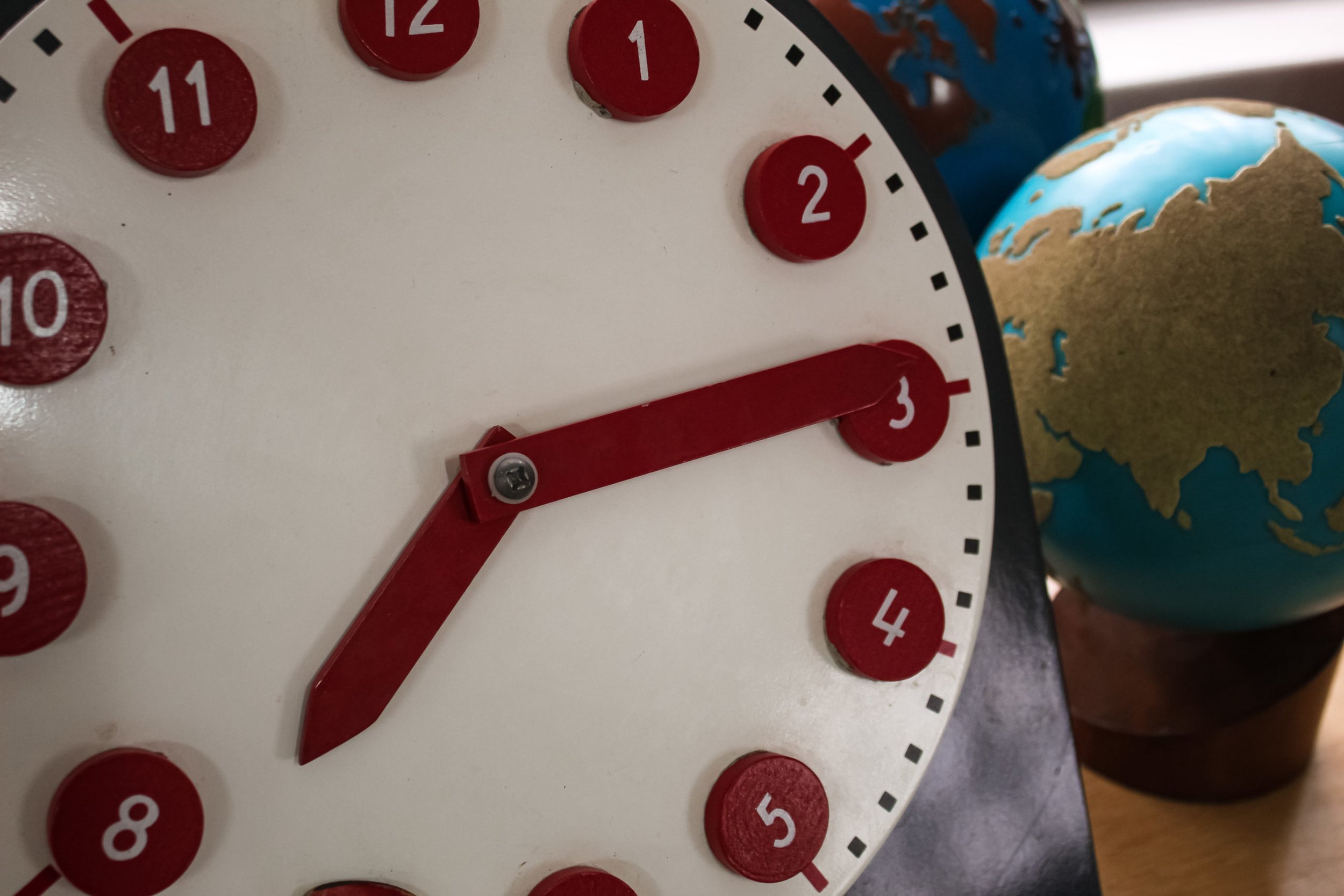
02
The three-hour work cycle
True concentration takes time to build. Each morning, children are given an uninterrupted stretch to choose, explore, and return to their work — without bells, without rushing.
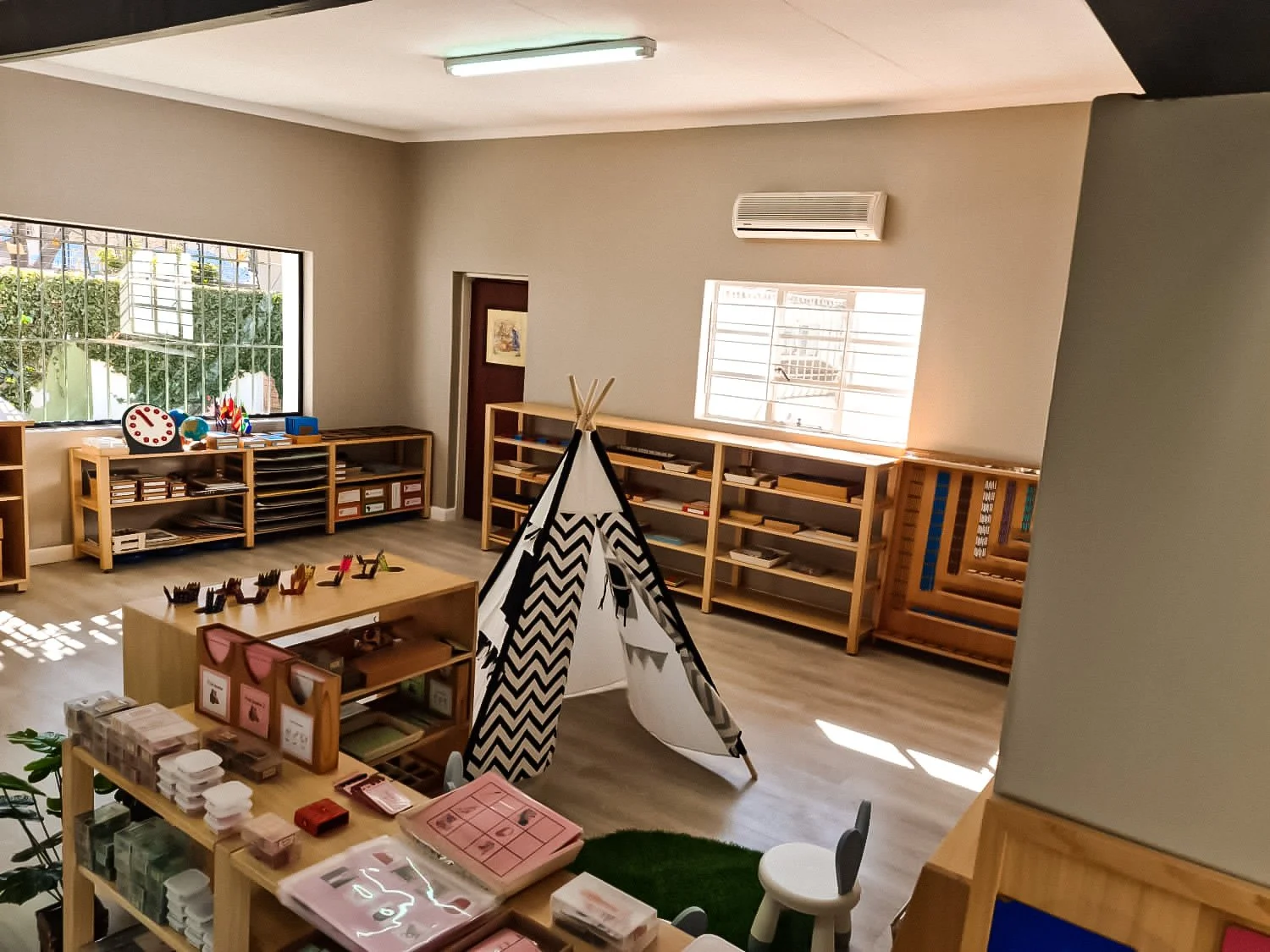
03
Mixed-age classrooms
Three to six-year-olds learn side by side. Older children mentor younger ones; younger children aspire to what's possible. Both grow from the exchange.
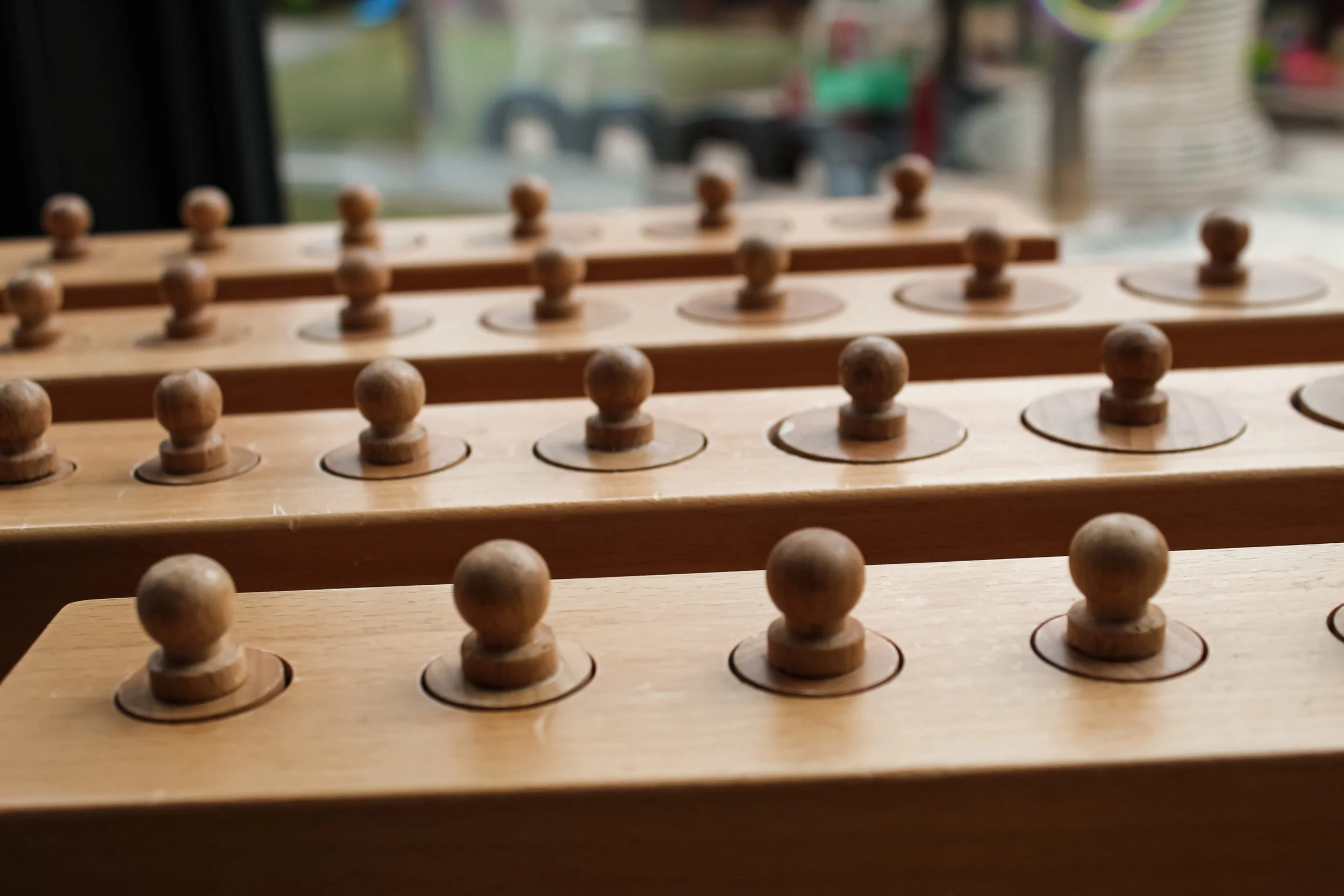
04
Concrete before abstract
A child doesn't memorise that 4+5=9 — they build it, with beads in hand, until the abstract idea of "nine" becomes something they've truly felt and understood.
A TYPICAL MORNING
A day in the life of a child.
07:00 – 08:30
Arrival
Children settle in gently, choosing their first activity as they arrive — no rush, no rigid start time.
08:30 – 11:30
The work cycle
Uninterrupted, child-led work. Practical life, sensorial, language, and mathematics materials are all freely chosen.
11:30 – 12:30
Outdoor time
Movement, nature, and the community garden - fresh air is as much a part of learning as anything indoors.
12:30 onwards
Lunch & rest
A calm, social lunch together, followed by quiet time or extramural activities for full-day children.
Designed to be
self-correcting.



MONTESSORI MATERIALSEvery material in a Montessori classroom has a built-in way for a child to know, on their own, whether they've done something correctly — a puzzle piece that only fits one way, a tower of cylinders that only stacks in one order.
This means children don't need an adult to tell them they're right. They discover it themselves, and that discovery builds something far more valuable than a correct answer — it builds confidence.
QUESTIONS WE OFTEN HEARCommon questions.
-
Yes — and typically more than ready. Montessori children consistently show strong outcomes in literacy, numeracy, focus, and independence by the time they transition.
-
There is deep structure — in the environment, the materials, and the daily rhythm. The freedom is in what a child chooses to work on, not whether there is order.
-
That's completely normal. Our guides gently reintroduce materials at different times, and a child's interests naturally shift and grow as they develop.
-
Through grace and courtesy, modelled daily by our teachers and older children. Natural consequences and consistent, calm boundaries replace punishment and rewards.
See the method
for yourself.
Reading about Montessori only goes so far. Come and watch a real morning unfold.